Machines and engines
Aviation & Aircraft Maintenance
You sign your name to work that people fly on. Inspections, repairs, overhauls, avionics. It is federally licensed, it is the most heavily documented trade on this list, and an A&P certificate is a credential that works in every state and most countries.
A day in it
- Hangar at six. Work cards for the day's inspection are already printed.
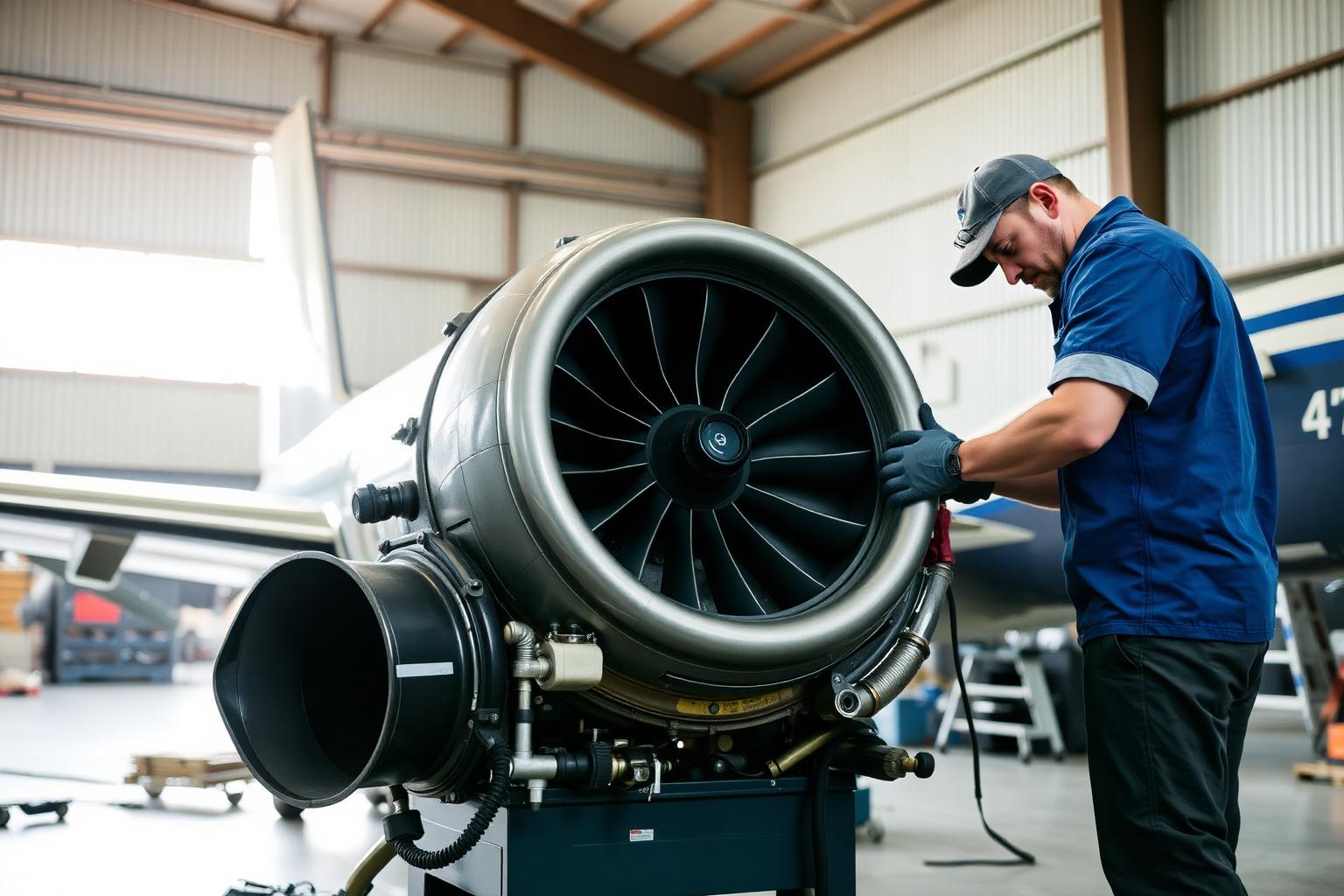
- Panels open, borescope the engine, check the compressor for damage.
- Every task gets signed. Your signature is the record.
- Find a cracked bracket on a control rod. It becomes a squawk and a parts order.
- Lunch, then the repair, done exactly to the manual. Not close to it. To it.
- Inspector signs behind me before anything closes up.
- Aircraft goes back on the line tomorrow morning.
What it pays
- Starting out
- $47,790
- Median
- $78,680
- Experienced
- $120,080
U.S. Bureau of Labor Statistics, Occupational Employment and Wage Statistics, May 2024 (national). Starting out = 10th percentile. Median = 50th. Experienced = 90th. Annual. Georgia figures to be added alongside national. SOC 49-3011. Real numbers only — never estimated, never rounded up.
How you get in
- —An FAA-approved A&P program, eighteen months to two years.
- —Or 30 months of documented experience under a certificated mechanic, then the exams.
- —Written, oral, and practical exams for Airframe and for Powerplant.
- —The Mustard Seed covers tuition, exam fees, and your first tool set.
What you need before you start
- —Documentation discipline. Every single thing you do gets written down.
- —Drug and alcohol testing and a clean background — this is a federal requirement.
- —Shift work. Aircraft get maintained at night because they fly during the day.
Someone doing it
Photograph, first name, age, and three or four sentences in their own words — to be supplied.
What it turns into
A&P, then Inspection Authorization, then lead, then avionics or powerplant specialization. Airlines, corporate flight departments, and Delta's Atlanta operation all hire here.
Want to talk to somebody doing this?
Two fields. A person reads it and texts you back.