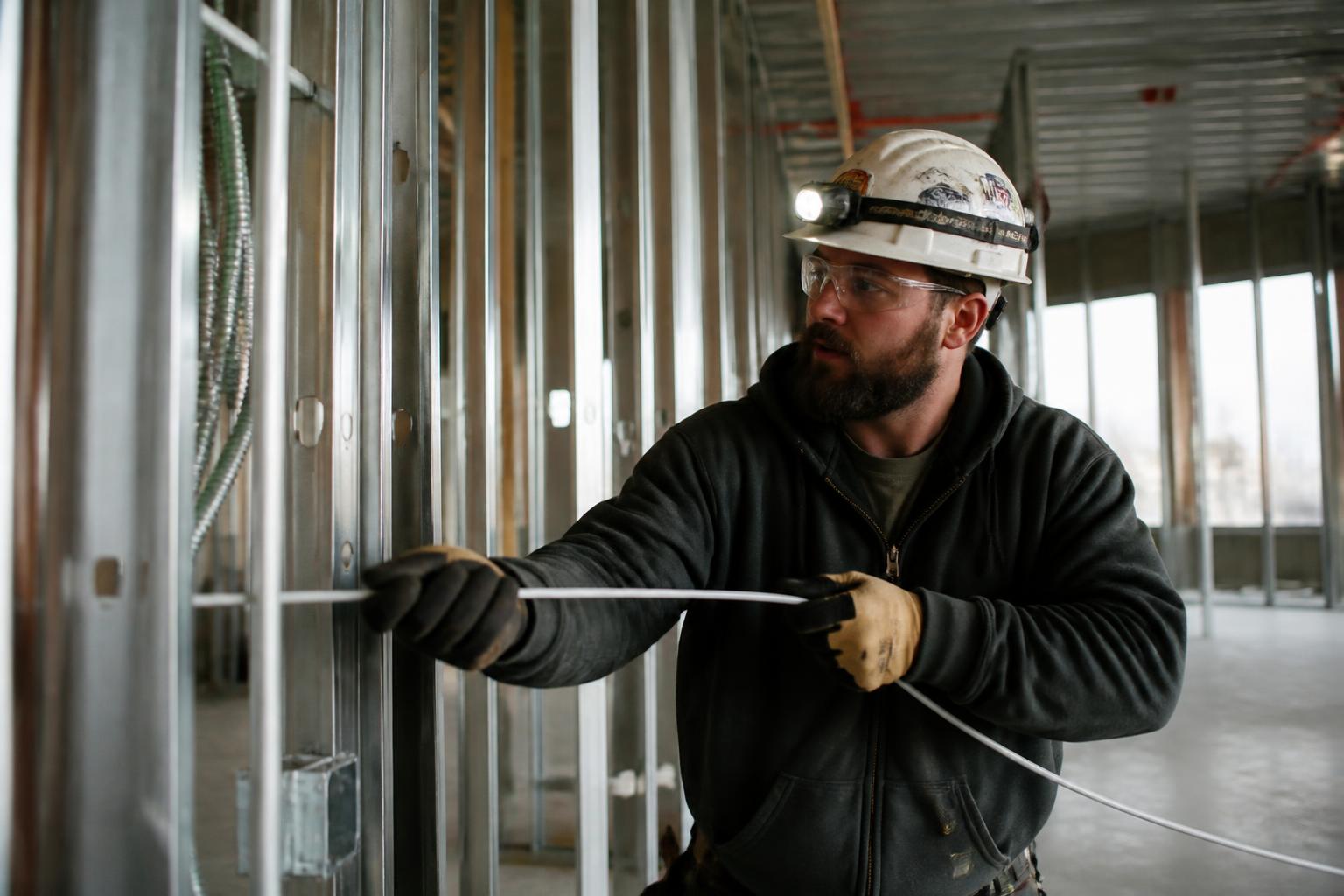
Keeping buildings alive
Electrical
You run power into buildings that don't have it yet and fix it in the ones that do. Most days you're working off prints on a site that isn't finished, or in somebody's basement finding out why half the house went dark. Everything anybody plugs in went through hands like yours first.
A day in it
- Trailer at seven, look at prints, get the day's floor from the foreman.
- Rough-in on a new build — boxes set, home runs pulled to the panel.
- Bend conduit through the morning. It either looks right or it doesn't.
- Lunch on the tailgate.
- Afternoon is a service call across town. No power to half a kitchen.
- Find it in the panel — a loose neutral on a shared circuit.
- Torque it down, test it, done in forty minutes.
What it pays
- Starting out
- $39,430
- Median
- $62,350
- Experienced
- $106,030
U.S. Bureau of Labor Statistics, Occupational Employment and Wage Statistics, May 2024 (national). Starting out = 10th percentile. Median = 50th. Experienced = 90th. Annual. Georgia figures to be added alongside national. SOC 47-2111. Real numbers only — never estimated, never rounded up.
How you get in
- —A four-year apprenticeship. You are paid from the first day and your pay steps up every year.
- —Or trade school first, then apprentice with credit for what you finished.
- —Georgia requires a license to pull permits on your own. That comes after the hours.
- —The Mustard Seed covers tuition, exam fees, and your first set of hand tools.
What you need before you start
- —You have to be able to read. Prints are a language and you'll be learning it for two years.
- —Steady hands and patience for work that has to be exactly right the first time.
- —Comfort in crawl spaces, attics, and unfinished buildings in every kind of weather.
Someone doing it
Photograph, first name, age, and three or four sentences in their own words — to be supplied.
What it turns into
Journeyman, then master electrician, then your own license and your own trucks. Industrial and controls work pays higher than residential and most people never find that out.
Want to talk to somebody doing this?
Two fields. A person reads it and texts you back.