Power and connection
Solar & Renewable Energy
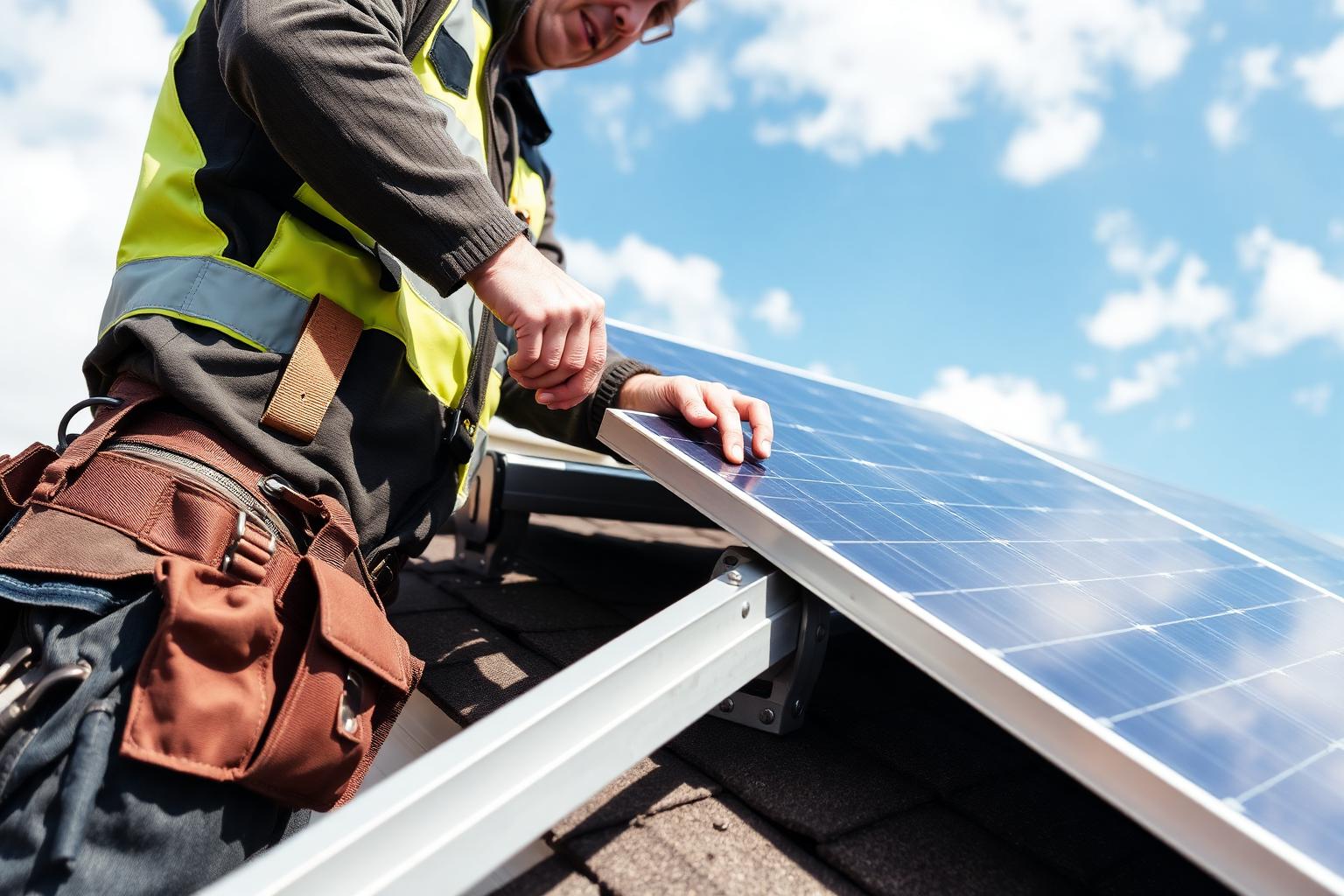
You put power generation on a roof or in a field. Racking, panels, inverters, interconnection. It is the newest trade on this list, it is electrical work with a different envelope, and the people entering it now will be the senior people in ten years.
A day in it
- Residential install, crew of four. Truck loaded the night before.
- Roof team sets flashing and rail while the ground team stages panels.
- Layout follows the engineered plan exactly — spacing, setbacks, fire access.
- Panels up and clamped, then the wire management underneath where nobody sees it.
- Lunch, then the electrical side. Inverter, rapid shutdown, conduit to the panel.
- Commissioning at the end. System comes online and the meter starts running backward.
- Inspection is scheduled for Thursday and everything has to be right for it.
What it pays
- Starting out
- $39,070
- Median
- $51,860
- Experienced
- $80,150
U.S. Bureau of Labor Statistics, Occupational Employment and Wage Statistics, May 2024 (national). Starting out = 10th percentile. Median = 50th. Experienced = 90th. Annual. Georgia figures to be added alongside national. SOC 47-2231. Real numbers only — never estimated, never rounded up.
How you get in
- —Hired and trained on the crew. Most installers start with no experience.
- —NABCEP certification is the industry credential and it moves your pay.
- —Electrical background accelerates everything — many solar electricians come from 47-2111.
- —The Mustard Seed covers training, NABCEP fees, and fall protection gear.
What you need before you start
- —Roofs and heat. It is roofing work with electrical stakes.
- —Fall protection, always.
- —The industry moves with policy and incentives. Companies come and go; the skill doesn't.
Someone doing it
Photograph, first name, age, and three or four sentences in their own words — to be supplied.
What it turns into
Lead installer, then commissioning and service, then electrical licensure and utility-scale or storage work. Battery storage is the fastest-growing corner of it.
Want to talk to somebody doing this?
Two fields. A person reads it and texts you back.